The document drawer can become a selling advantage
By Nick Devonport, Managing Director · England · Reviewed 26 October 2026
The scenario below is illustrative. It explains our approach; it is not a customer testimonial or a report of a completed case.
Most owners have a drawer, an email trail or a folder containing the history of their home. Turning that collection into useful information is one of the least glamorous and most valuable parts of preparing a sale.
A moment in the moving journey
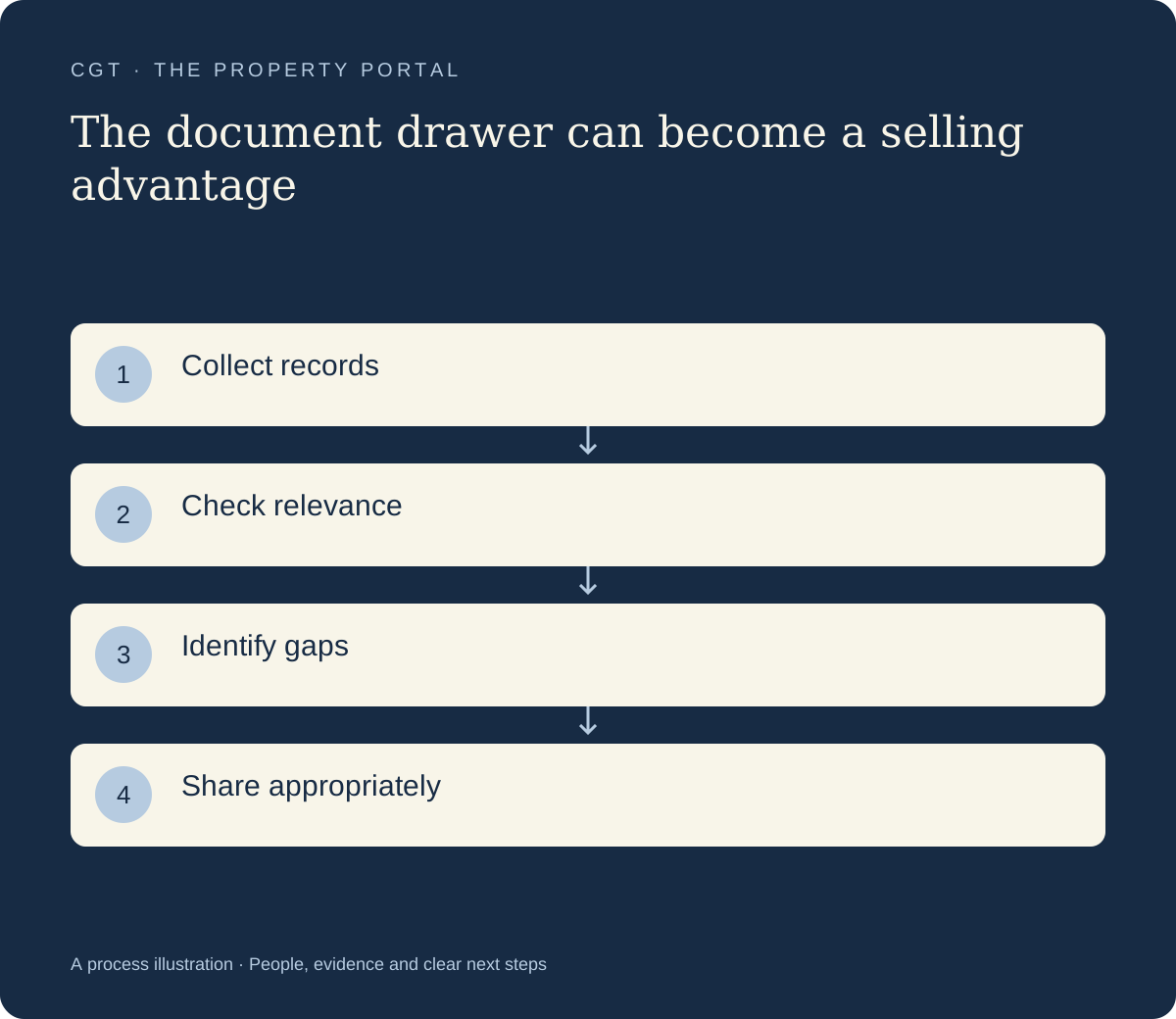
Take a seller who has receipts for replacement windows, an old guarantee and several versions of a floor plan. None should simply be uploaded and treated as current. We need to establish what relates to this property, what the document actually says and which questions belong with the conveyancer.
How our property portal helps
Our property portal's document storage gives the team a place to organise relevant records. The useful innovation is the conversation around the document: why it matters, who supplied it and whether somebody still needs to check it. More files do not automatically mean more clarity.
The people behind the process
This is where teamwork saves repeated effort. The seller brings knowledge of the home; our team helps organise the questions; the legal adviser interprets the evidence. When a colleague takes over, a coherent record makes it easier to continue the work without starting again.
Your next step
Before an appraisal, gather the documents you already have and tell us what you cannot find. There is no need to make the paperwork look perfect. An honest gap is something we can help you address.
Sales portal journeys described here depend on Sales being enabled on the website. Ask the team which services and tools are available for your move.
Sources checked on 26 October 2026. Legislation, guidance and proposals are distinguished above. General education: the actual property, agreement and circumstances need review; specialist advice may be required.